Compare
Phone teleprompter or hardware rig: what actually differs
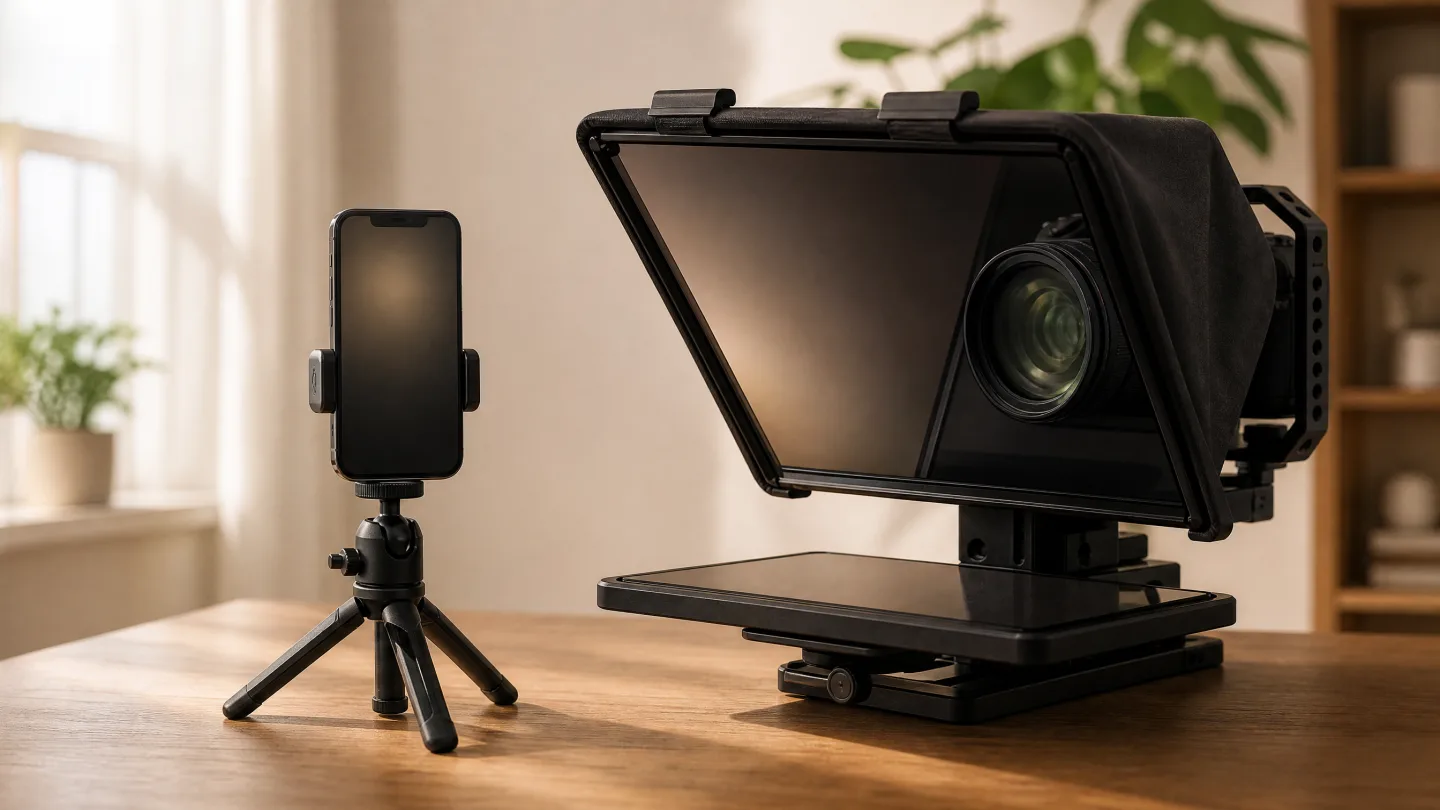
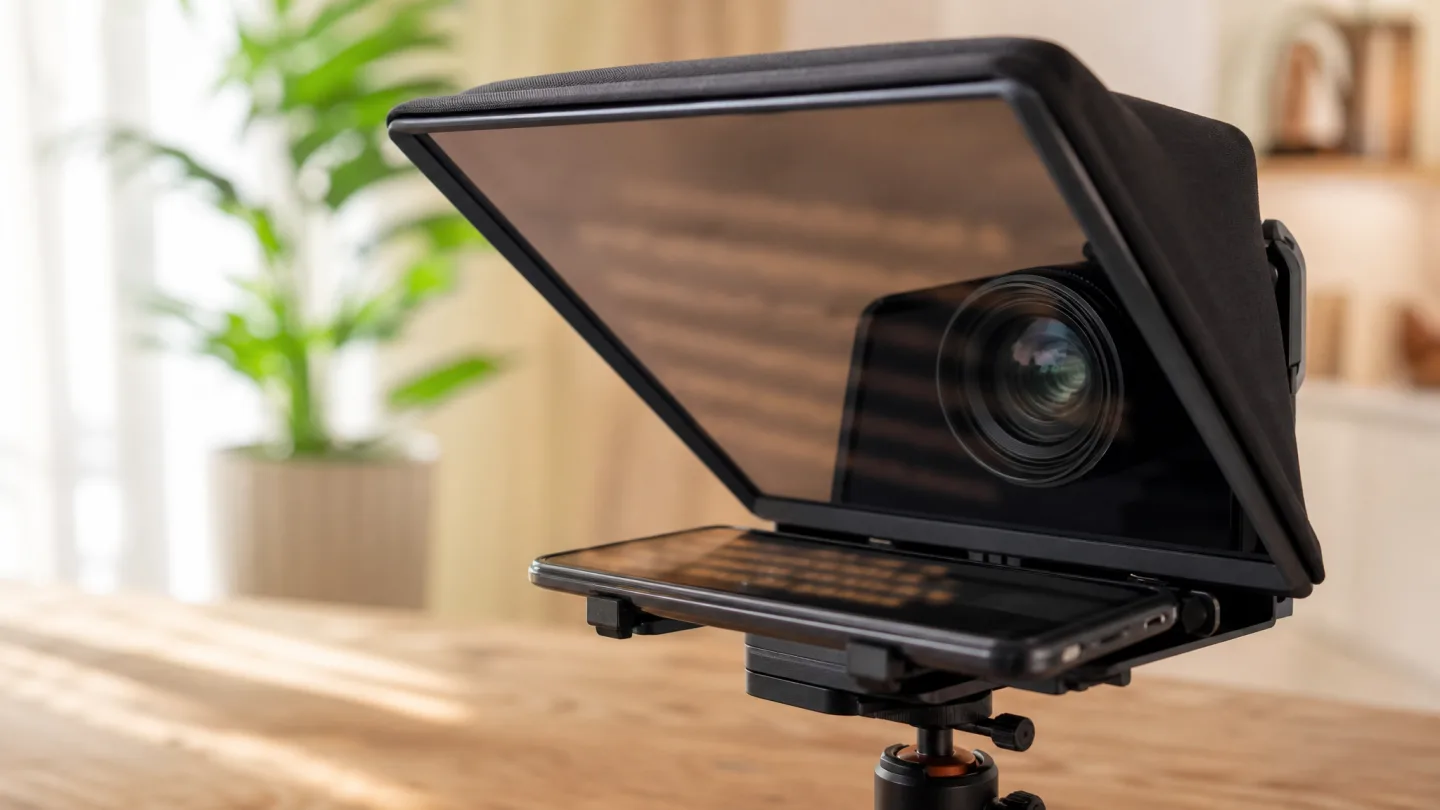
A hardware teleprompter works because of one piece of glass. The camera shoots through a half-mirrored pane while you read the script reflected on it, so your eyes can sit exactly on the lens. A phone setup has no glass. The script shows on the screen beside the camera, so your eye line moves a little. That is the core difference, and every other trade-off follows from it.
Last reviewed
Side by side
Each row covers a difference that can be described objectively. No brands are rated.
| Factor | Phone teleprompter | Hardware teleprompter |
|---|---|---|
| Eye line | Slightly off the lens; distance and text size make it hard to notice | Can sit exactly on the lens, which is its biggest advantage |
| Equipment cost | The phone or tablet you already own | A hood, glass, camera and support system |
| Setup time | Mount it and record, usually a minute or two | Assembly and alignment take time, and repeat at every new location |
| Portability | Fits in a pocket and moves with you | Bulky and heavy, usually kept in one room |
| Image quality ceiling | Set by the phone camera | Set by the camera you pair it with, so the ceiling is higher |
| Scrolling | Supports Voice Sync, which follows your pace | Depends on the prompting software; much of it scrolls at a fixed speed |
| Prompting and recording in one place | One app does both, and the prompt never appears in the export | Usually two devices, each set up on its own |
When hardware is worth it
Three situations justify a glass rig: the finished video demands perfect eye contact, as in brand spots or formal interviews; you already shoot on a dedicated camera and image quality is a requirement; or the location is fixed and one setup will last a long time.
What these have in common is that the cost of setting up once is spread across many videos. If every session means building the rig again, the efficiency advantage disappears.
When a phone is enough
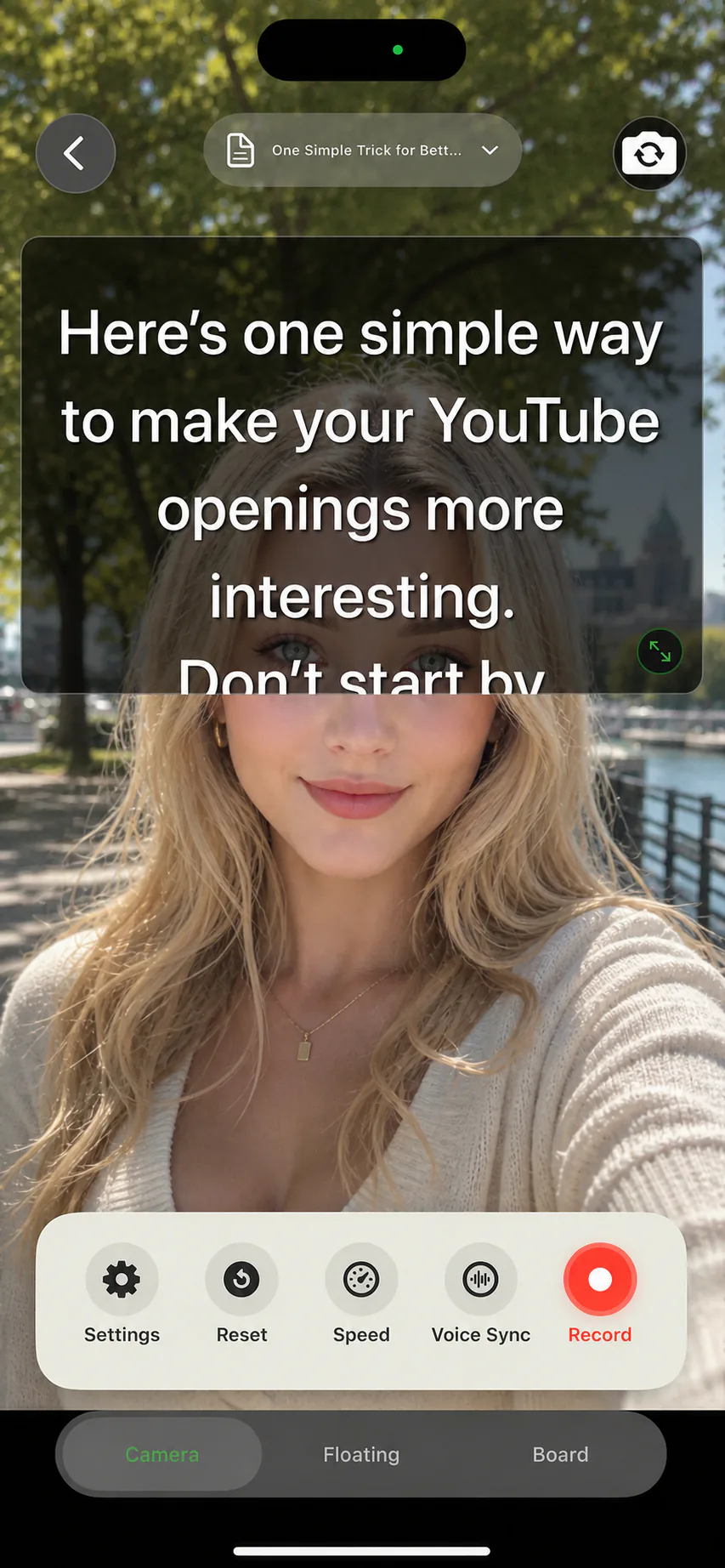
For regular talking-head updates, course lessons, presentations and live stream talking points, a phone setup has few real weak spots. Two habits make the eye line shift hard to see: put the prompt on the side of the screen closest to the lens, then step back to the distance where the text is still easy to read. Teleprompter speed and eye contact covers the details.
A phone also does something most rigs do not: the script follows your pace. Much hardware prompting software scrolls at a fixed speed, while Voice Sync waits when you pause. For content you revise often or partly improvise, that matters more to your output than image quality.
Frequently asked questions
Will viewers always notice a phone teleprompter?
Not necessarily. The shift depends on how far the prompt sits from the lens and how far you sit from the device. With the prompt near the lens and some distance, most viewers do not notice.
Does teleprompter glass need mirrored text?
Yes. The glass reflects the screen, so the display has to be mirrored. In AI Teleprompter you can turn mirror mode on or off for each script.
What should I buy first on a small budget?
Solve stability and height first. A stand that holds the device at eye level does more for the finished video than any other accessory.
Which works better for live streaming?
Live streams reward quick reactions and accurate talking points, so a phone with a live streaming teleprompter setup is usually more practical.
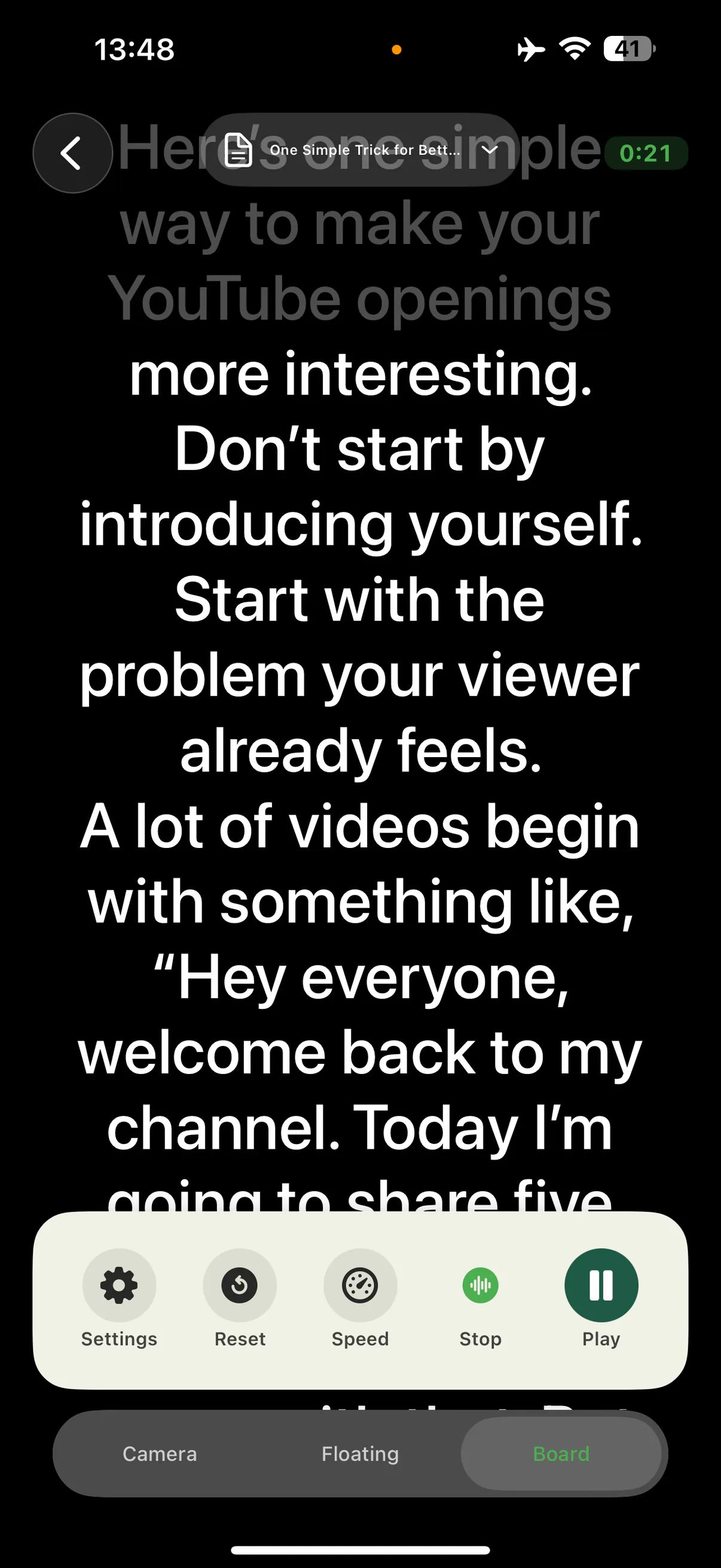

Record your next video with AI Teleprompter
Download on the App Store and check the available trial. Record inside the app to export your video without the prompt.