Guide
How to read a script while recording without sounding like it
The goal is not to hide that you have a script; it is to deliver it so well that nobody thinks to ask. That takes two skills: writing lines meant for the mouth, and reading them with the rhythm of speech instead of the rhythm of text. Tools like Voice Sync handle the scrolling; this guide handles the human half.
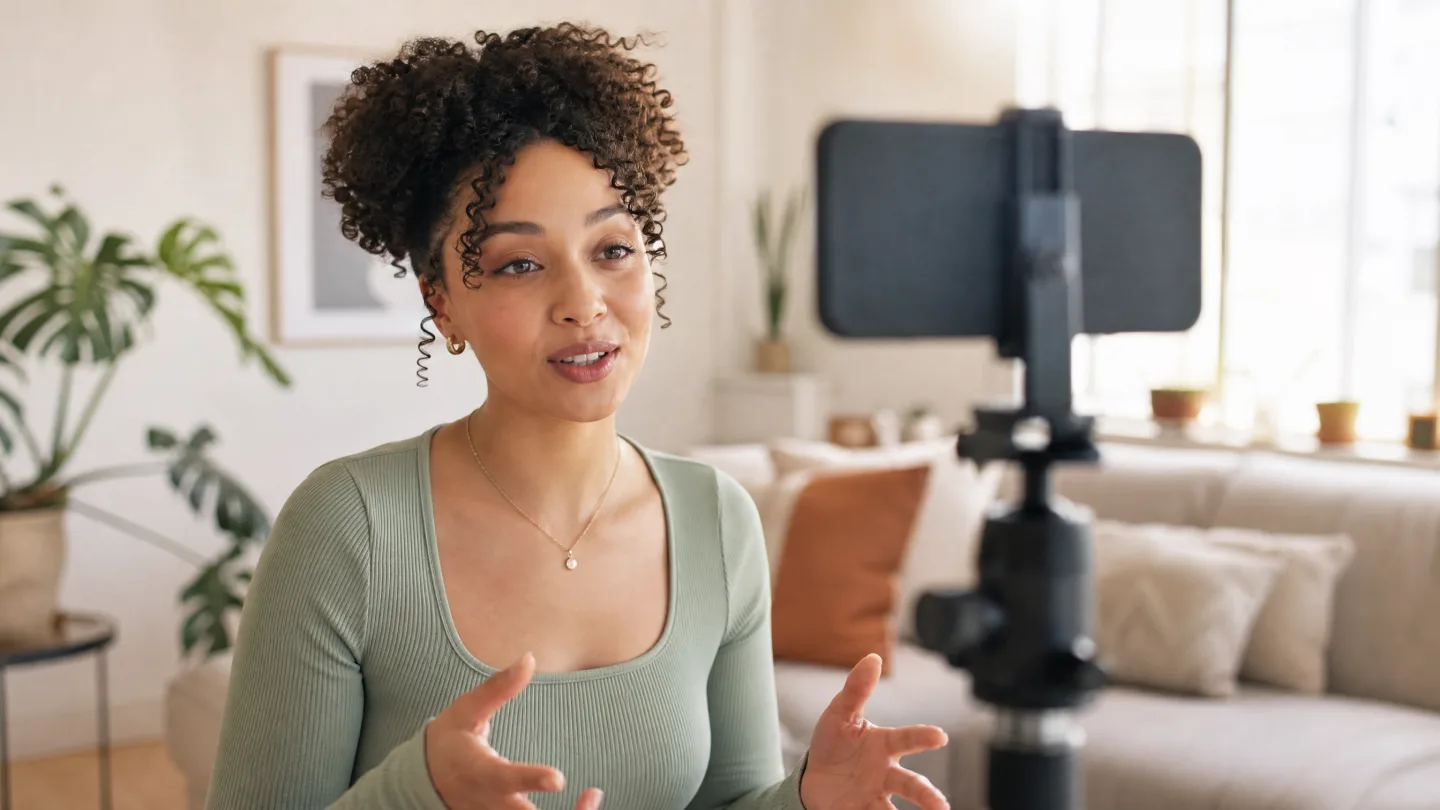
Write for the mouth, not the page
Written English and spoken English are different dialects. Written: "The implementation of this strategy facilitates improved outcomes." Spoken: "This works better, and here is why." Read every line aloud before it earns a place in the script. If you would not say it to a colleague, rewrite it until you would.
Contractions are your friend: it is, you are, do not. So are short sentences with one idea each. Long subordinated clauses force you to hold your breath and rush the landing, which is the exact sound of someone reading. Most scripts improve immediately when you cut every sentence over twenty words in half.
Break lines where you breathe
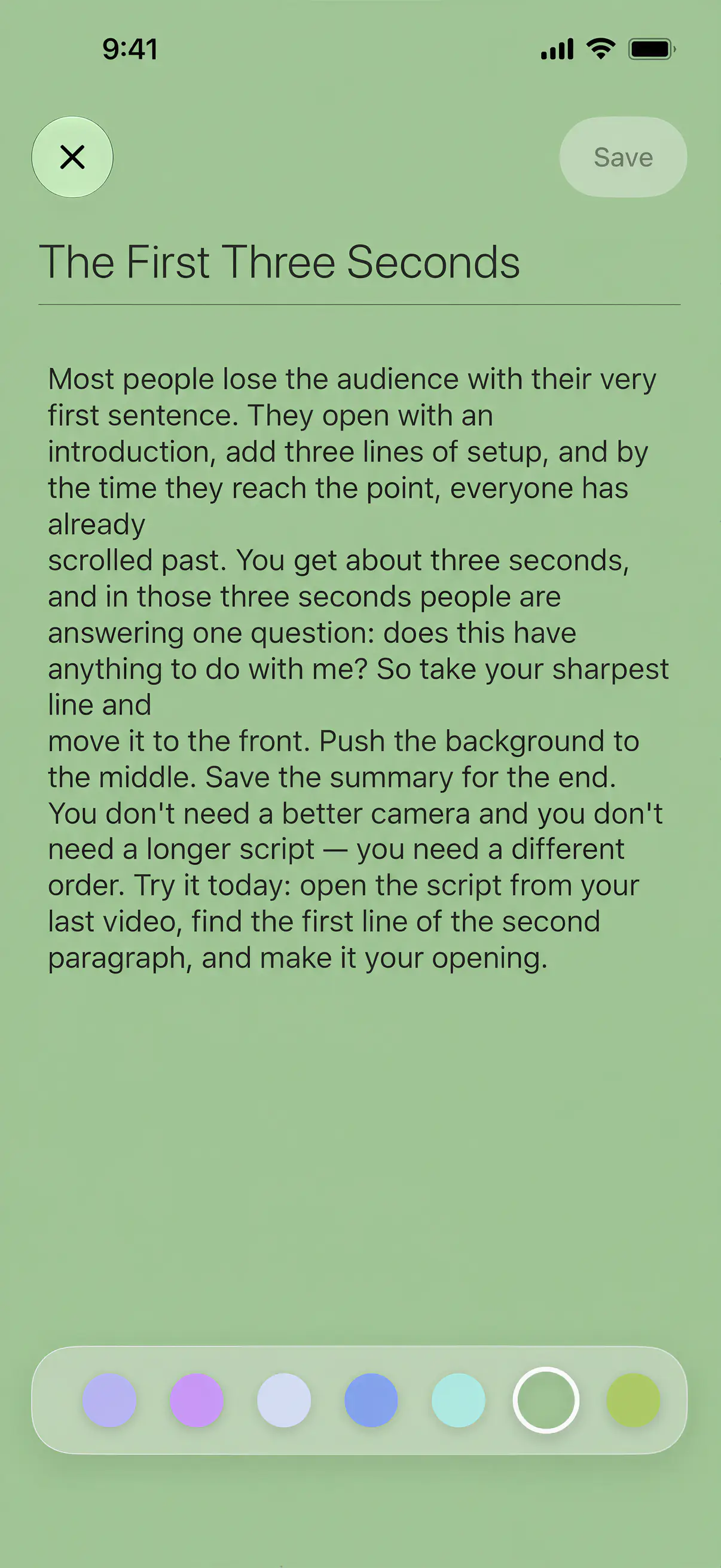
Prompt text should be broken the way verse is broken: one breath unit per line. Each line holds one thought, and the break tells you where a micro-pause belongs. Dense paragraphs force your eyes to scan ahead while your mouth is still talking, and that scanning is what viewers read as "reading".
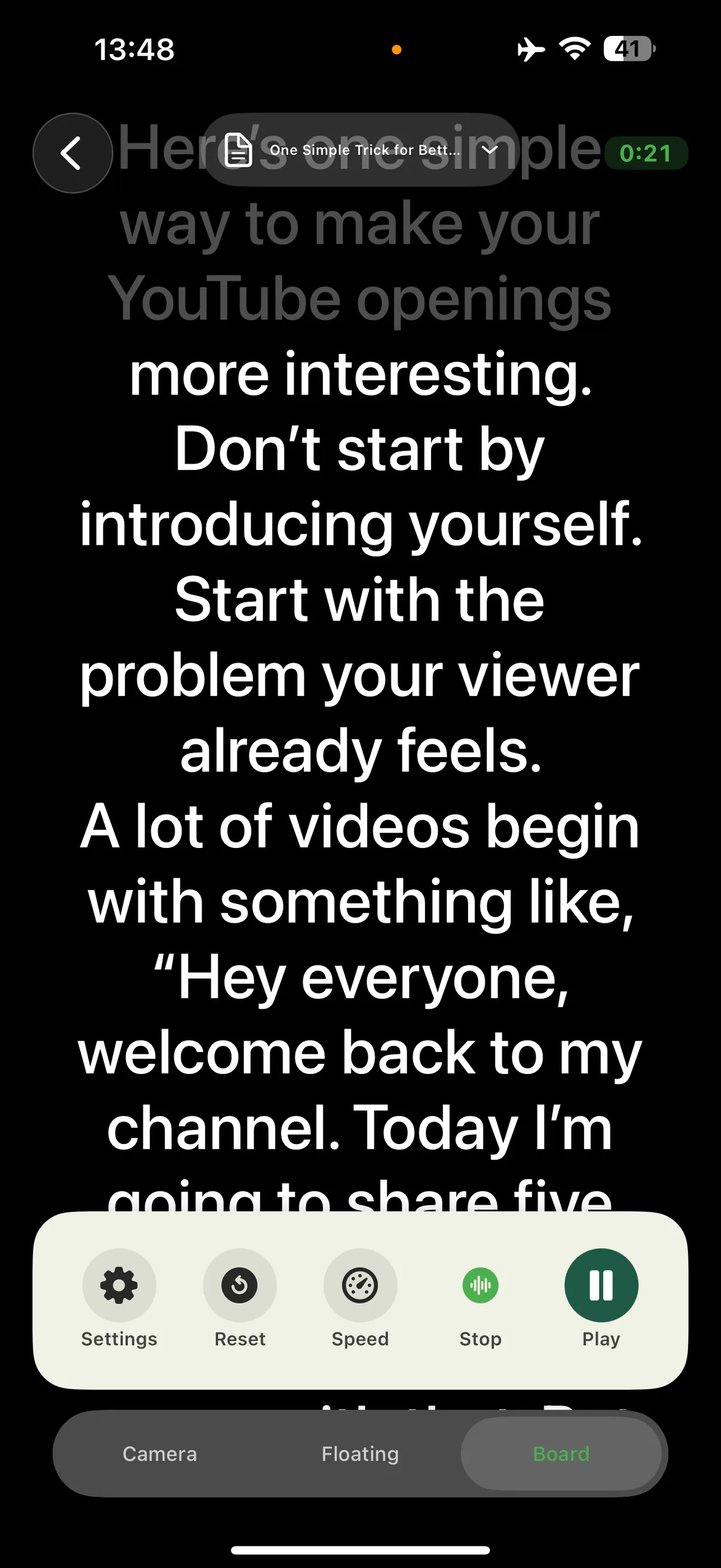
In AI Teleprompter you control line breaks in the editor, and smaller font with narrow margins keeps each line short on screen. Three short lines on screen beats six long ones every time: less eye travel, easier tracking, better eye contact.
Mark the script like a performer
Before recording, annotate. Mark the words you will stress, the spots where you pause for effect, and the beats where the slide or poster changes. A script that encodes performance beats reads itself; a plain wall of text makes you improvise the performance live, which is when delivery goes flat.
A simple system is enough: caps or bold for stress, a slash for a short pause, a blank line for a long one, and a bracketed note where material changes. Two minutes of marking saves five retakes.
The recording pass that works
Silent skim
Read the script silently once for sense. Note anything you do not actually believe or would not say, and change it now.
Aloud rehearsal
Read it out loud at performance energy. Fix every line you stumble on; stumbles at rehearsal are wording problems, not delivery problems.
Mark and adjust
Add stress and pause marks. Break any line you rushed. Set font size and margins for your recording distance.
Record with voice-following scroll
Let Voice Sync track your position. Pause freely; the script waits, and your pauses read as confidence.
Review the first ten seconds
If the hook sounds read, redo it immediately while the setup is warm. The rest of the take usually takes care of itself.
Eye line: the last giveaway
Keep the prompt near the lens and let your eyes work in small movements. Looking slightly past the camera, as if the viewer stood just behind it, reads as direct address at normal framing. If you catch yourself locking onto the text with a hard stare, soften your focus and let your face move between lines.
Blink normally. It sounds trivial, but readers suppress blinking, and viewers register the stare as tension even when they cannot name it. For the geometry behind all of this, see speed and eye contact.

Mistakes that make scripts sound read
- Written English: long clauses, no contractions, vocabulary you never say
- Paragraph prompts: eyes scan ahead instead of tracking one line
- Racing the scroll: fixed speed too fast removes every pause
- Zero rehearsal: first read-through happens on the recording
- Hard eye lock: staring at text without blinking or face movement
- Restarting on every stumble: recover in place; the edit will thank you
Reading on camera FAQ
How do you read a script without sounding robotic?
Write spoken sentences with contractions, break lines at breath points, mark stress and pauses, rehearse aloud once, and use voice-following scroll so the script adapts to your pace instead of the reverse.
Is it okay to read a script on YouTube?
Yes, most polished channels script at least their hooks and calls to action. Viewers react to delivery quality, not to the existence of a script, and the delivery techniques above are what separate the two.
Should I memorise or read?
Read, with a good prompt setup. Memorisation costs hours and still breaks under recording pressure. A well-placed prompt plus spoken-word writing gets the same natural result in a fraction of the time.
What if I keep stumbling on one line?
Rewrite it. A line you cannot say after two tries is badly worded for speech, no matter how good it looks on paper. Say the idea to an imaginary friend, then write that version down.

Record your next video with AI Teleprompter
Start with a 3-day free trial on the App Store. The script follows your voice, and the prompt never enters the video.